

Union Minister for Road Transport and Highways Nitin Gadkari announced on Wednesday that the Multi-Lane Free Flow (MLFF) toll system and AI-driven highway management will roll out nationwide by the end of 2026. This move aims to eliminate waiting times at toll plazas, significantly enhancing commuter convenience.
The implementation of MLFF will integrate cutting-edge technology including artificial intelligence, satellite systems, and number plate recognition. This innovative tolling system will facilitate a seamless flow of vehicles without the need to stop at toll booths, marking a major advancement in highway management.
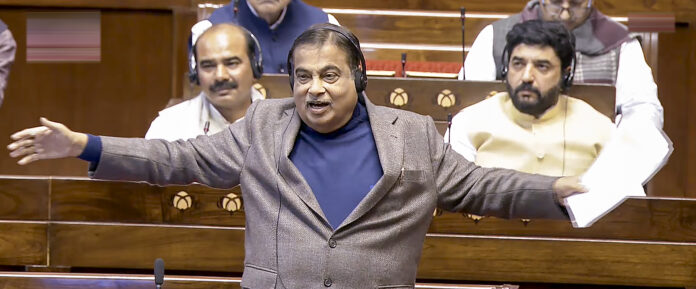
During a briefing in the Rajya Sabha, Gadkari stated, “With MLFF, commuters will not have to stop at toll plazas. Vehicles will be able to cross toll points at speeds of up to 80 km per hour.” This system is set to replace the existing FASTag mechanism, streamlining the toll payment process.
Previously, toll payments could take between three to ten minutes. The introduction of FASTag reduced this time to under a minute. Gadkari highlighted the increased revenue from FASTag, noting it boosted collections by approximately ₹5,000 crore. He emphasized, “MLFF is an even better facility, and our goal is to bring waiting time down to zero minutes.”
The Minister shared that the new MLFF toll system would not only save commuters time but also conserve fuel worth ₹1,500 crore annually. Moreover, he projected an increase in government revenue by ₹6,000 crore, stating that the system would also curb toll leakage and theft.
“By 2026, this work will be completed 100 per cent. Once implemented, toll theft will end, transparency will increase, and commuters will not face any inconvenience at toll plazas,” Gadkari assured the members of the House.
The AI-enabled technology is set to drastically reduce travel times and enhance overall operational efficiency on national highways. Gadkari reassured that the focus remains on creating a transparent, efficient, and corruption-free system for road users.
Importantly, the Union Minister clarified the government’s jurisdiction, stressing that the central government manages national highways, while issues related to state highways and urban roads lie outside its purview. He pointed out that misinformation often circulates on social media, attributing urban road issues to national highways.
“We are making every effort to ensure a transparent, efficient, and corruption-free system,” Gadkari reiterated.
This announcement represents a significant step forward in modernizing India’s highway infrastructure. The introduction of the MLFF toll system and AI technology aims to better streamline travel for millions of road users throughout the country, enhancing the overall journey experience.