

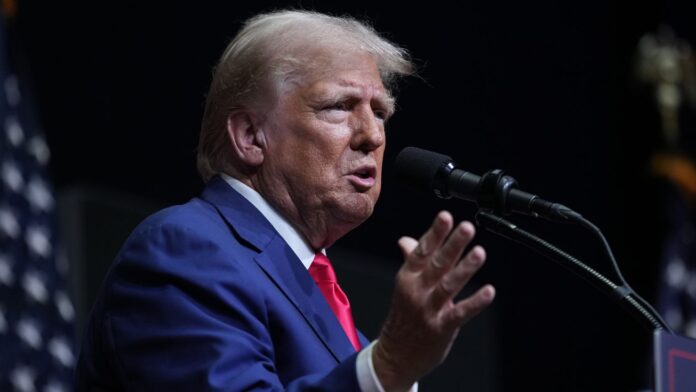
President Donald Trump announced on Tuesday that he has temporarily paused “Project Freedom,” designed to escort maritime traffic through the vital Strait of Hormuz. This decision comes as the President claims progress in reaching a peace agreement with Iran. The announcement, made via his Truth Social account, highlights a shift in strategy as the United States reassesses its military presence in the region.
In his post, Trump stated, “Great progress has been made toward a complete and final agreement with representatives of Iran.” He elaborated, citing the cooperation requested by Pakistan and other countries in light of significant military success during the ongoing campaign against Iran. Trump emphasized that while the blockade will continue, the operational pause aims to finalize the potential agreement.
Project Freedom, launched on Monday, aimed to escort over 23,000 civilians trapped in the Persian Gulf to safety amidst rising tensions. The operation commenced after the U.S. Central Command began executing orders on the heels of Trump’s announcement that Sunday.
However, the initiative quickly led to increased friction in the narrow shipping lane, responsible for carrying approximately one-fifth of the world’s oil supplies. Reports indicated that Iranian forces attacked UAE ships, prompting the U.S. military to claim the destruction of several Iranian small boats targeting American interests.
Trump’s announcement followed a declaration by U.S. Secretary of State Marco Rubio, who confirmed the conclusion of Operation Epic Fury, initiated on February 28. Rubio noted that the operation had met its objectives and expressed a preference for diplomatic resolution over escalating hostilities.
Rubio stated, “Operation Epic Fury is concluded. We achieved the objectives of that operation. We’re not cheering for an additional situation to occur. We would prefer the path of peace.” He underscored the administration’s desire to negotiate a deal, though he acknowledged that Iran has resisted this approach.
On the matter of Project Freedom, Rubio reaffirmed the mission’s defensive nature, aiming to safeguard civilian lives. “This is not an offensive operation,” he reiterated, emphasizing that U.S. forces would respond only if provoked. “If they’re attacking us or they’re attacking a ship, you need to respond to that,” he concluded.
As the situation unfolds in the region, observers remain cautious about the implications of Trump’s decision to pause Project Freedom. Analysts have raised concerns over how these developments could affect global oil markets and regional stability.
The suspension of naval operations reflects a high-stakes diplomatic gamble that may hinge on Iran’s willingness to engage constructively in negotiations. Trump’s administration faces the challenge of balancing military readiness with the pursuit of a peaceful resolution.
The international community will closely monitor any further announcements concerning the potential treaty and the future of U.S. military operations in the Strait of Hormuz. Should an agreement emerge, it could significantly alter the current landscape of U.S.-Iran relations and broader geopolitical dynamics.